Tucked away in the western shadow of the Everest region, the Gokyo Valley is arguably the most breathtaking alpine sanctuary in the Nepal Himalayas. While the main highway of trekkers pushes east toward the dirt and moraine of Everest Base Camp, Gokyo offers something far more striking: a chain of six oligotrophic, bright-turquoise glacial lakes fed directly by the Ngozumpa Glacier—the longest glacier in the Himalayas.
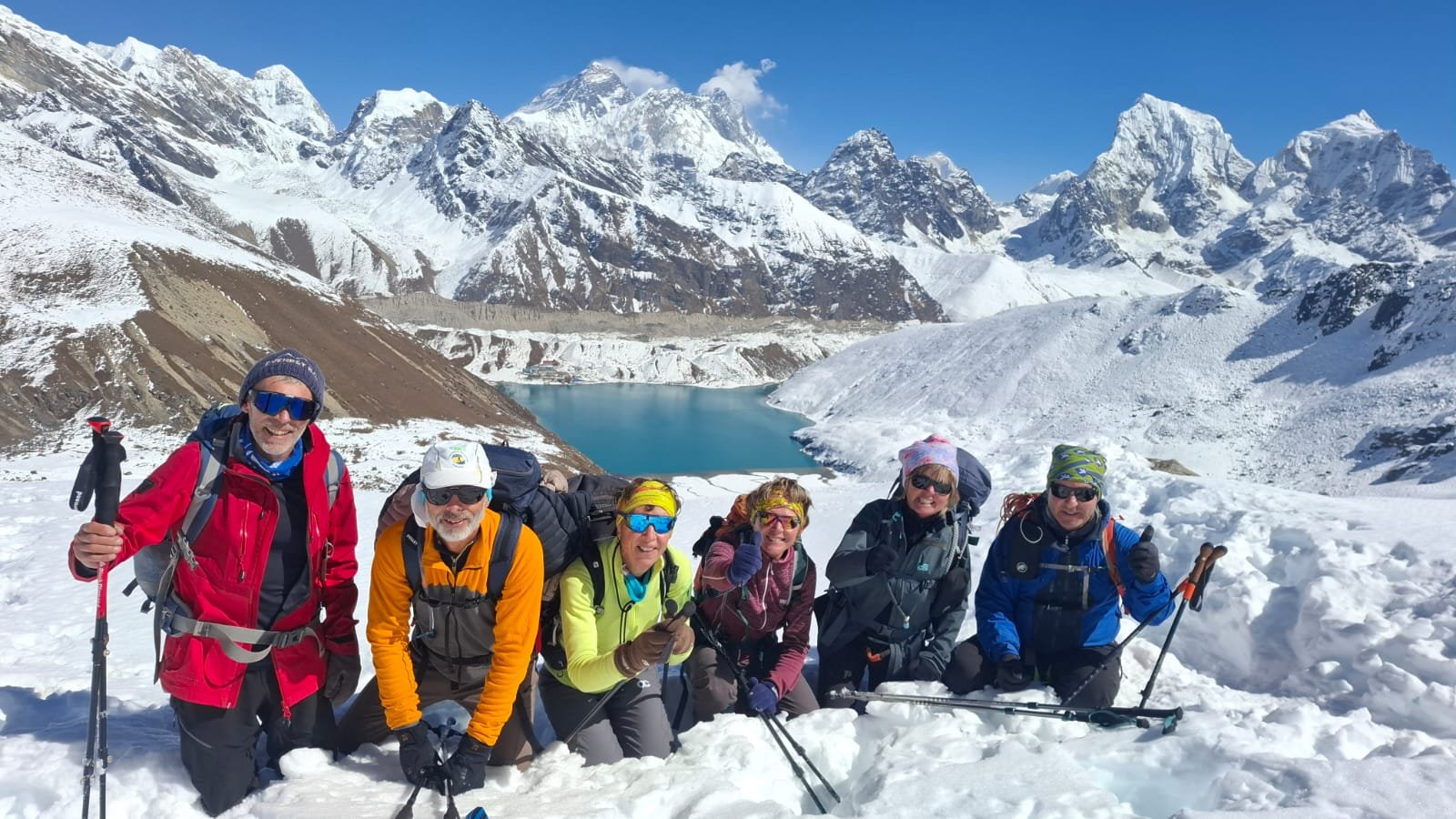
The small settlement of Gokyo sits right on the edge of the third and main lake, Dudh Pokhari, at 4,750 meters (15,584 ft). Towering directly behind the village like a giant heap of crushed stone and prayer flags is Gokyo Ri (5,357 m / 17,575 ft). From its summit crest, you get what many veteran mountaineers consider the single greatest panorama on Earth: an unobstructed amphitheater of four 8,000-meter giants—Mount Everest (8,848 m), Lhotse (8,516 m), Makalu (8,485 m), and the colossal wall of Cho Oyu (8,188 m) guarding the border with Tibet.
The Myth of the Serpent Gods: The Sacred Nāgas
In both Hindu and Sherpa folklore, the Gokyo Lakes are not just meltwater basins; they are the physical abodes of ancient serpent spirits (Nāgas) who govern rainfall, snowstorms, and subterranean water sources.
According to regional lore, the third lake—Dudh Pokhari ("Milky Lake")—is particularly sacred to the snake deity Nag Devata. Local Sherpas believe that polluting the pristine water or behaving disrespectfully near its shores directly enrages the serpent masters, who can trigger sudden blizzards, avalanches, or livestock illness in retaliation. At the southern corner of the lake stands a small temple dedicated to Lord Vishnu and Shiva, marking the spot where mountain deities were said to bathe during celestial assemblies.
The Buddhist Legacy: The Six Gems of Avalokiteshvara
To Tibetan Buddhists and the Sherpa community, the Gokyo chain is deeply tied to the compassion of Chenrezig (Avalokiteshvara):
- Sacred Lake Chain: The six glacial lakes—Longponga (First Lake), Taujun (Second Lake), Dudh Pokhari (Third Lake), Thonak (Fourth Lake), Ngozumpa Tsho (Fifth Lake), and Gyazumpa (Sixth Lake)—are regarded as mirror-like reflections of the Buddhist virtues, each radiating clarity and emptiness (shunyata).
- Janai Purnima & Merit: During the full moon of Janai Purnima in August, hundreds of Hindu and Buddhist pilgrims make the punishing high-altitude journey to Gokyo. Devotees bathe in the sub-zero waters of the third lake to wash away past karma, while monks chant protective sutras and hoist strings of lungta (wind-horse prayer flags) along the shoreline.
- Respecting Sacred Ice: Traditionally, local herders and lamas forbade swimming or washing clothes in the lakes to keep the spiritual purity of the water intact, a conservation ethos that protected the wetland long before it became an internationally recognized Ramsar site.
Extreme Alpine Ecology: Flora & Fauna
Because the lakes sit above 4,700 meters within Sagarmatha National Park, the environment is harsh, windswept, and fragile:
- Flora: Above the tree line, forests of fir and birch give way to sprawling carpets of dwarf rhododendron, fragrant sunpati (Rhododendron anthopogon), alpine sedges, and moss campion. In the warmer summer months, delicate yellow potentillas and tiny high-altitude gentians bloom along the damp lake fringes.
- Fauna: Gokyo is one of the highest wetland habitats on Earth. The lakes serve as a crucial high-altitude breeding and stopover ground for migratory waterfowl along the Central Asian Flyway, most notably the Ruddy Shelduck (Brahminy duck), which pairs together for life and swims in the icy shallows. Along the moraine scree slopes, watch for herds of Himalayan Tahr grazing precariously, solitary musk deer, and golden eagles soaring overhead. The rocky lateral moraine of the Ngozumpa Glacier is also hunting territory for the elusive Snow Leopard.
High-Pass Sustenance: Sherpa Comfort Food
At 4,750 to 5,300 meters, your body requires fuel that burns slow and warms from the inside out:
- Sherpa Riki Kur with Drokpa Achar: Freshly grated potato flatbreads fried on a griddle until crisp around the edges, topped with melted yak butter and a dollop of drokpa achar—a fiery sauce made from homemade fermented cottage cheese (serkam), garlic, and mountain chilies.
- Tsampa & Salt Butter Tea (Su-Chya): Roasted barley flour kneaded with hot, salty tea churned with yak butter. It is the ultimate lightweight, high-energy mountain fuel that local guides rely on before a 4:00 AM summit push up Gokyo Ri.
- Garlic Noodle Thukpa & Syakpa: Steaming bowls of thick hand-pulled noodles or potato dumplings simmered with generous amounts of crushed garlic—nature’s best vasodilating defense against altitude sickness—paired with dried, spiced yak meat (Sukuti).
The Climb & Trek: From Lake Shore to Gokyo Ri.
Trekking the Gokyo Valley is a rewarding journey on its own or a spectacular addition to an Everest circuit:
- The Route: The trail splits from the classic EBC route at Sanasa (above Namche Bazaar), climbing up through the quiet forests of Mong La (3,975 m), Dole, and Machhermo before tracing the roaring Dudh Koshi River gorge up to the first lake.
- The Gokyo Ri Sunrise Push: The climb of Gokyo Ri takes 2 to 3 hours directly from Gokyo Village. It is a non-technical switchback trail up a steep gravel ridge, but starting at 4,750 m and topping out at 5,357 m makes every breath count. The reward at dawn is unmatched: watching the first rays of crimson sunlight strike the south face of Everest and Lhotse, with the turquoise third lake glowing beneath you like a drop of liquid jewel.
- The Cho La Pass Connection: For seasoned hikers, Gokyo is the jumping-off point to cross the icy Cho La Pass (5,420 m), traversing across to Dzongla to link up directly with Everest Base Camp and Kala Patthar.
Best Seasons:
- Autumn (October – November): Flawless blue skies, stable crisp weather, and the deepest turquoise water color across all six lakes.
- Spring (April – May): Warmer daytime temperatures, semi-frozen ice shelves thawing across the water, and lingering snowbanks on the summit ridge.
Gokyo Lake and Gokyo Ri represent the ultimate masterpiece of the Everest region. It is a place where sacred serpent spirits guard turquoise waters, prayer flags flutter against sub-zero winds, and four of the planet's highest mountains stand before you in silent majesty. To sit on the rocky crown of Gokyo Ri at dawn, watching the shadows of giants retreat across the Ngozumpa Glacier, is an experience of pure Himalayan scale that will leave you quietly humbled for the rest of your life.