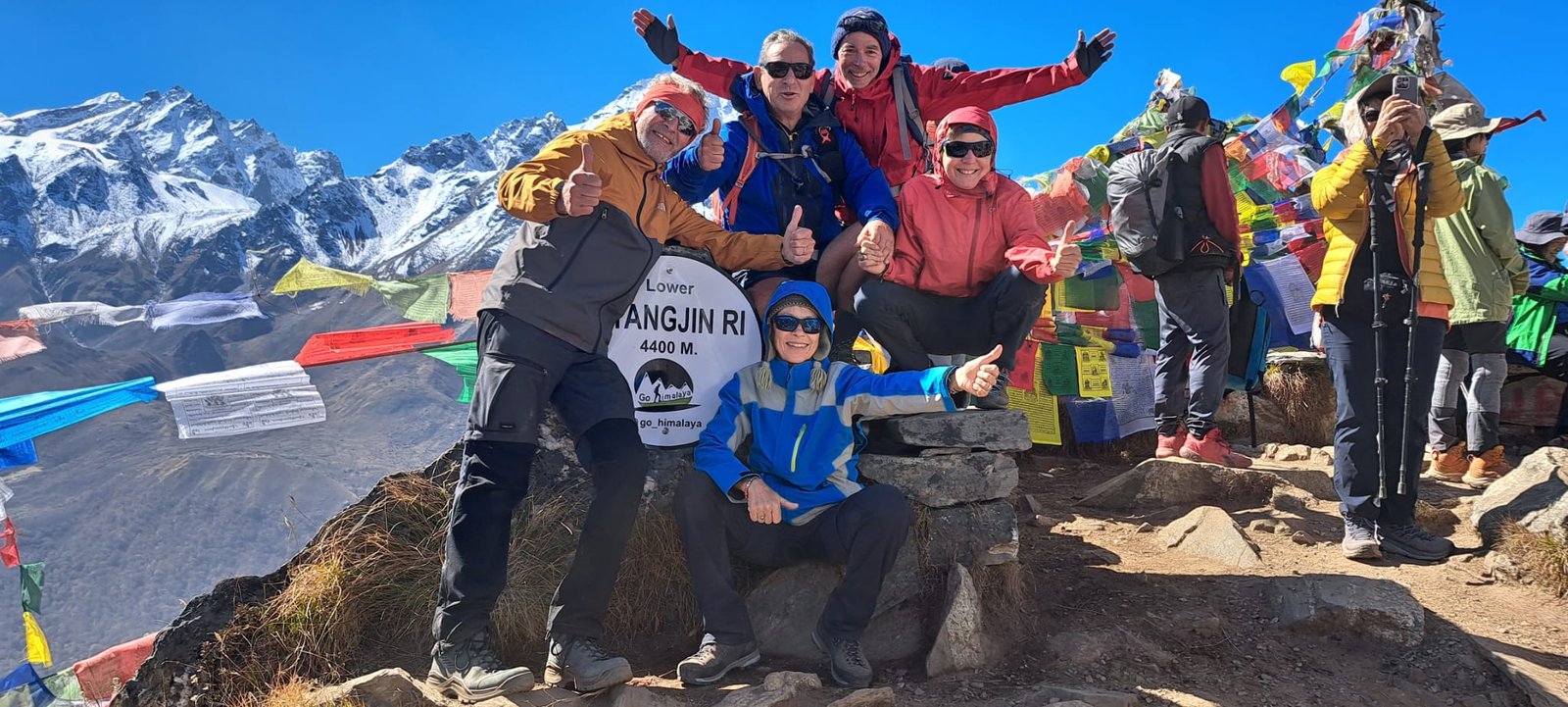
Perched directly above the stone lodges of Kyanjin Gompa in the upper Langtang Valley, Kyanjin Ri (4,773 m / 15,659 ft) is the ultimate panoramic vantage point of north-central Nepal. While technically an alpine ridge rather than a detached, freestanding peak, climbing to its rocky, prayer-flag-smothered crown is a mandatory rite of passage for anyone trekking the Langtang trail.
The ascent is famously broken into two distinct milestones: the lower viewpoint (often marked as Kyanjin Ri I at roughly 4,400 m) and the true rocky spine at 4,773 meters. Standing at the high point drops you into a 360-degree theater of glacial drama, dominated by the massive south face of Langtang Lirung (7,227 m), Changbu, Yansa Tsenji, and the serrated border ridge trailing directly into Tibet.
History & The Valley of the Yak: Myth of the Lost Beast
The name Langtang itself comes straight out of centuries-old Tibetan folklore. According to local lore, the entire valley was discovered by an ancient Tibetan lama who had lost a prized yak from his herd.
In the Tibetan language, "Lang" translates to yak, and "Dhang" (or Tang) means to follow. The holy man tracked the runaway beast through dense forests and narrow gorges into this uncharted, hanging glacial basin, discovering a fertile paradise sheltered by giant snowy peaks. Concluding that the valley was a divine sanctuary gifted by mountain spirits, his followers migrated here to build stone pastures. Kyanjin Gompa and the vantage point of Kyanjin Ri mark the upper sanctuary where the sacred yak was said to have finally rested.
The Buddhist Legacy: Kyanjin Monastery & Padmasambhava’s Beyul
Like the neighboring valleys of Helambu and the Khumbu, the Langtang region is celebrated in Nyingma Tibetan Buddhist texts as a sacred Beyul—a hidden valley consecrated by Guru Padmasambhava in the 8th century as a refuge for peace and dharma practice during times of worldly strife.
- The Heritage of Kyanjin Gompa: Sitting at the foot of the ridge at 3,860 meters, Kyanjin Gompa is a centuries-old monastery that anchors the spiritual life of the valley's indigenous Tamang and Bhotia communities. The hum of morning horns, scent of juniper incense, and spinning brass prayer wheels fill the crisp air before hikers set off up the ridge.
- Mani Walls & Summit Chortens: The trail ascending Kyanjin Ri passes ancient stone chortens and extensive mani walls carved with the sacred mantra Om Mani Padme Hum. At the summit crest, hundreds of multi-colored lungta (wind-horse prayer flags) whip relentlessly against the high gusts, carrying prayers of compassion directly toward the hanging icefalls of Langtang Lirung.
Glacial Ecology: Flora & Fauna of Langtang National Park
The steep climb up Kyanjin Ri takes you from the edge of the subalpine scrub zone straight into raw, glaciated scree and tundra:
- Flora: Above Kyanjin Gompa, the birch, larch, and dwarf rhododendron forests disappear completely. The lower slopes of Kyanjin Ri are blanketed in tough alpine turf, aromatic sunpati (Rhododendron anthopogon, harvested by local monks for temple incense), and hardy moss cushions clinging to glacial moraines. In late spring and summer, miniature blue gentians and wild Himalayan edelweiss peek out between cracked granite boulders.
- Fauna: Langtang National Park provides a critical sanctuary for the endangered red panda (Ailurus fulgens) in its lower bamboo gorges, while the high rocky slopes beneath Kyanjin Ri belong to agile herds of Himalayan tahr (wild mountain goats) and colonies of Himalayan marmots whistling from their burrows. Flocks of red-billed choughs ride the summit crosswinds, and Lammergeiers (bearded vultures) soar alongside golden eagles above the glacier.
Mountain Fuel: Yak Cheese & High Teahouse Sustenance
Because Kyanjin Gompa serves as the cozy base camp before the summit push, the food here blends hearty mountain fuel with unique local valley specialties:
- Artisanal Yak Cheese: Kyanjin Gompa is home to one of Nepal's oldest Swiss-assisted yak cheese factories, operating since 1955. Trekkers can buy fresh, nutty, creamy slices of hardened cheese straight from the source—a dense, protein-rich snack to stash in your pocket for the climb.
- Tibetan Bread with Sea Buckthorn Jam: Fluffy, golden fried bread served hot alongside tangy, bright-orange jam made from wild sea buckthorn berries harvested along the Langtang Khola riverbanks.
- Garlic Soup & Shyaphale: Steaming bowls of broth heavy with roasted garlic to aid circulation and acclimatization, paired with shyaphale—crispy, deep-fried pastry pockets filled with spiced cabbage, potatoes, or minced meat.
The Climb & Trek: From Valley Floor to Summit Ridge
Unlike technical mountaineering peaks, Kyanjin Ri is a non-technical walk-up ridge, but the sheer gradient and thin air demand solid cardiovascular fitness:
- The Route from Kyanjin Gompa: The trail starts right behind the lodges, immediately climbing a steep, dusty zig-zag path up the grassy mountain flank. After roughly 2 hours of switchbacks, you reach the lower viewpoint marked by prayer flags (Kyanjin Ri I).
- The Ridge Traverse to the Top: From the lower ridge, another hour of scrambling along an exposed, rocky spine brings you to the true high summit at 4,773 meters. From the crest, the vast terminal moraine of the Langshisha glacier stretches east toward the jagged peaks of Dorje Lakpa and Urkinmang.
- Acclimatization Pacing: The return hike takes roughly 4 to 5 hours round-trip. Because you start from Kyanjin Gompa (3,860 m), gaining nearly 1,000 meters of elevation in a single morning, an early 6:00 AM start is vital to summit before midday clouds roll over the glaciers.
Best Seasons:
- Autumn (October – November): Deep blue Himalayan skies, crisp snow-free ridge conditions, and razor-sharp mountain visibility.
- Spring (March – May): Red and pink rhododendron blooms along the valley trail, lingering snowdrifts on the upper ridge, and milder daytime temperatures.
Kyanjin Ri captures the very soul of the Langtang Valley. It demands early-morning grit, steady breathing, and determination on the switchbacks but rewards you with one of the most intimate, wall-to-wall panoramas of 7,000-meter glacier giants found anywhere in the Himalayas. Standing on its rocky crest wrapped in snapping prayer flags, looking down at the quiet roofs of Kyanjin Gompa and out across the border peaks of Tibet, it becomes instantly clear why the ancient lamas saw this sacred valley as a hidden sanctuary worth preserving for centuries.