← ALL INFO
September 10, 2026

Mount Everest / Sagarmatha (8,848m)

At an official height of 8,848.86 meters (29,031.7 ft), Mount Everest needs no introduction. Known as Sagarmatha ("Forehead of the Sky") in Nepali and Chomolungma ("Goddess Mother of the World") in Tibetan and Sherpa, this colossal pyramid of rock and ice straddles the border of Nepal and Tibet. It is the ultimate geographic benchmark, where commercial airliners cruise at eye-level and the air holds only a third of the oxygen found at sea level.
The History, The Names & The Summit Milestones

Before British surveyors labeled it "Peak XV" and eventually named it after Sir George Everest in 1865, local indigenous populations had revered the mountain for centuries under its sacred regional names.

The modern mountaineering obsession kicked off in the early 20th century, marked by the mysterious 1924 disappearance of George Mallory and Andrew Irvine (Mallory famously quipped he wanted to climb it "because it's there"). Triumph finally arrived on May 29, 1953, when Sir Edmund Hillary of New Zealand and Tenzing Norgay Sherpa of Nepal became the first verified humans to stand atop the summit. Since then, the mountain has witnessed legendary feats—from Reinhold Messner’s first solo ascent without supplemental oxygen to modern Sherpa record-breakers like Kami Rita Sherpa scaling the apex dozens of times.

The Myth & The Goddess: Miyolangsangma

To the Sherpa people of the Khumbu region, Everest is far more than a physical challenge—it is the physical throne of Miyolangsangma, the Tibetan Buddhist goddess of inexhaustible giving and prosperity. She is one of the Five Long-Life Sisters (Tseringma) charged by Guru Padmasambhava to protect the Himalayan borderlands.

According to Sherpa lore, Miyolangsangma rides a golden mythical lion and distributes food and wealth to the virtuous. Climbing her sacred body without pure intentions, deep humility, and spiritual permission is believed to provoke mountain fury. This is why no expedition ever sets foot above Base Camp without holding a Puja ceremony—a sacred Buddhist ritual led by a Lama to appease Miyolangsangma, bless climbing gear, and ask the mountain gods for safe passage across the Khumbu Icefall.

The Buddhist Legacy: Monasteries & The Sacred Beyul

The Everest region falls entirely within the sacred sanctuary of Beyul Khenbalung—a hidden valley consecrated by Guru Rinpoche in the 8th century as a refuge of peace.

  1. Tengboche Monastery (Dawa Choling Gompa): Perched on a high ridge at 3,867 m with an unobstructed backdrop of Everest and Ama Dablam, Tengboche is the spiritual heartbeat of the Khumbu. It hosts the colorful Mani Rimdu festival every autumn, where monks perform sacred mask dances (cham) depicting the triumph of Buddhism over malevolent forces.
  2. Mani Walls & Chortens: Every trail winding up toward Base Camp is carved with thousands of slate stones bearing the mantra Om Mani Padme Hum. Mountain etiquette dictates that travelers must always walk to the left (clockwise) of these sacred monuments to maintain cosmic balance.

Extreme Ecology: Flora & Fauna

Sagarmatha National Park is a UNESCO World Heritage site featuring dramatic climatic transitions from subalpine birch forests to barren, glaciated lunar landscapes:

  1. Flora: Below 4,000 meters, lush valleys feature blue pines, firs, juniper, and thick blooms of rhododendron. As you push past the tree line into the alpine zone, vegetation shrinks to dwarf shrubs, lichen, mosses, and high-altitude cushions like Arenaria bryophylla, which survive up to 6,000 meters.
  2. Fauna: The lower forests shelter the shy Musk Deer, Himalayan Tahr, red pandas, and the brilliant Himalayan Monal (Danphe). Higher in the rock screes, apex predators like the Snow Leopard patrol the crags alongside Tibetan wolves. The summit itself hosts the highest permanent living creature on Earth: the microscopic Himalayan Jumping Spider (Euophrys omnisuperstes), which lives in rock crevices at 6,700 meters feeding on stray insects blown up by mountain winds.

Mountain Fuel: Khumbu Trail Sustenance

High-altitude metabolism burns fuel at twice the normal rate. The cuisine along the Everest trail is calorie-dense, warming, and built for recovery:

  1. Sherpa Potato Curry & Riki Kur: Potatoes are the traditional staple crop of the Khumbu. Riki Kur is a grated potato pancake fried golden on a griddle, served with a dollop of fresh yak butter and spicy drokpa chili-cheese sauce.
  2. Tsampa Porridge: Roasted barley flour mixed with hot butter tea (Su-Chya) or milk—a compact, slow-burning powerhouse carb favored by high-altitude porters.
  3. Sherpa Stew (Syakpa): A thick, hearty stew packed with hand-rolled dough pieces, potatoes, wild mountain herbs, garlic, and dried yak meat (Sukuti).

The Trek: Classic EBC, Gokyo & High Passes

Trekking in the Everest region is one of the world’s great pilgrimages for outdoor lovers, offering diverse trails for different comfort and challenge levels:

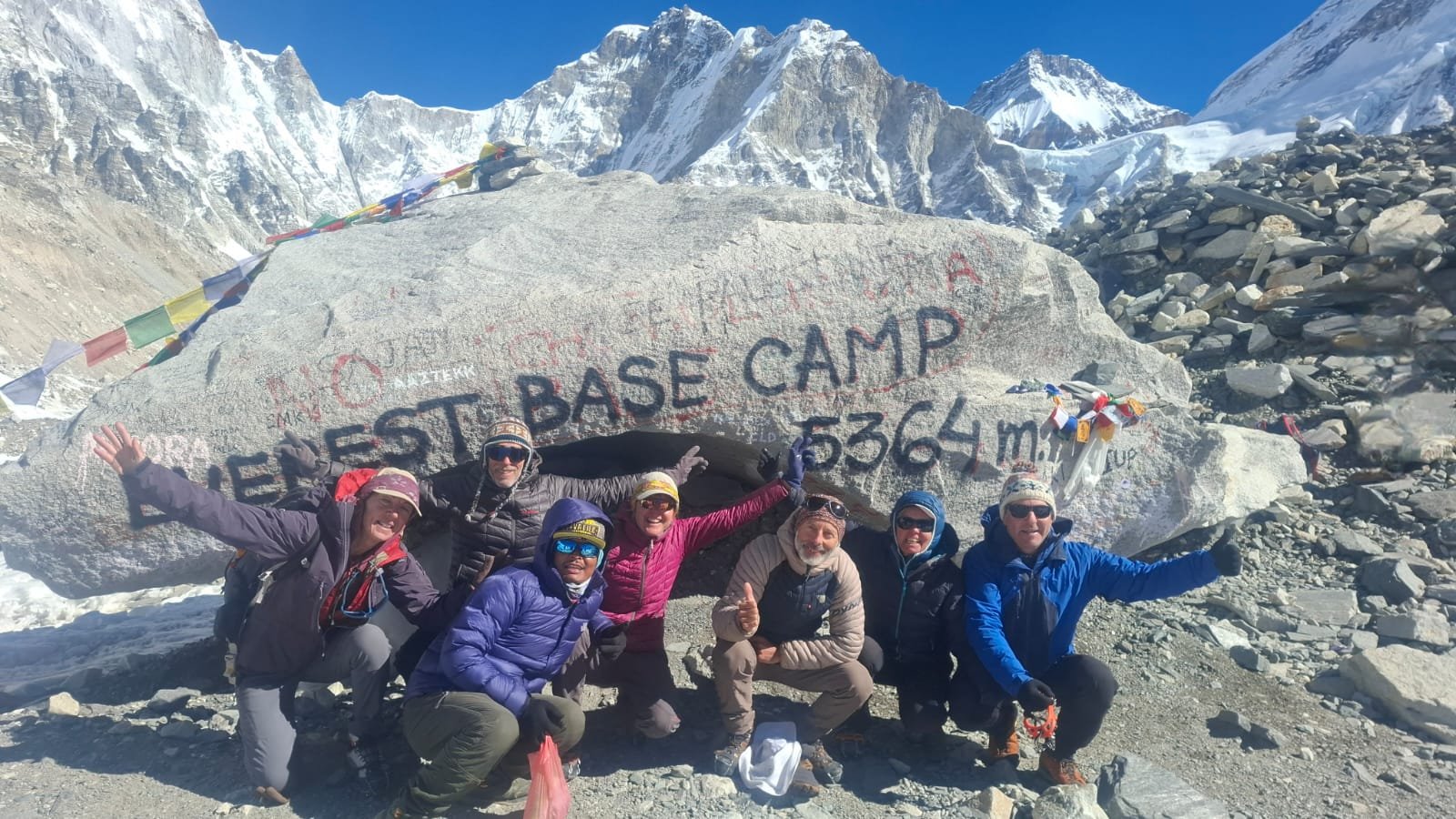
  1. The Classic Everest Base Camp (EBC) Route: The standard 12–14 day trek begins with the iconic flight into Lukla (2,846 m), climbing steadily through the Sherpa capital of Namche Bazaar (3,440 m), Tengboche, Dingboche, and Gorak Shep, culminating at Everest Base Camp (5,364 m) and the sunrise viewpoint of Kala Patthar (5,545 m).
  2. The Gokyo Lakes & Cho La Route: A popular alternative or extension that veers west to turquoise glacial lakes, climbs Gokyo Ri (5,357 m) for views of four 8,000-meter peaks (Everest, Lhotse, Makalu, Cho Oyu), and crosses the glaciated Cho La Pass (5,420 m).
  3. Trail Difficulty & Acclimatization: Rated strenuous. The high elevation makes altitude sickness a major factor; built-in acclimatization rest days in Namche Bazaar and Dingboche are non-negotiable.

Best Seasons:

  1. Spring (March – May): Active climbing season at Base Camp, blooming rhododendrons, and milder temperatures.
  2. Autumn (September – November): The gold standard for trekking, offering crisp blue skies, stable weather, and clear visibility.

Mount Everest / Sagarmatha is more than a geographic peak; it is an enduring symbol of human ambition, ecological extremes, and deep spiritual reverence. Whether standing among fluttering prayer flags at Kala Patthar watching the morning sun illuminate the black pyramid of rock, listening to monks chant beneath the shadow of Ama Dablam, or sharing hot potato pancakes around a teahouse stove, the Khumbu leaves a permanent imprint on anyone who journeys into the realm of the Goddess Mother.

1